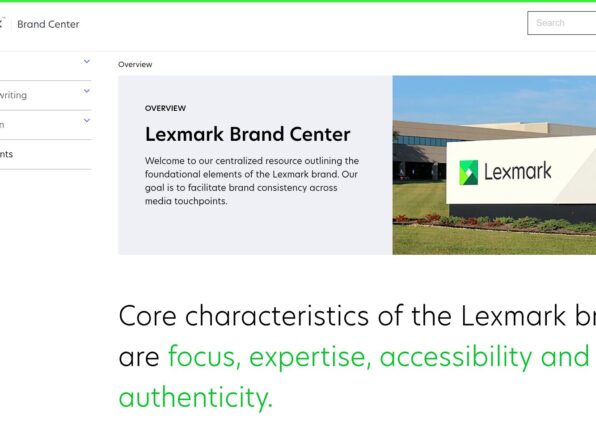
Leading the Creation of Lexmark Brand Central
Every brand needs a place where the rules live — not locked away in a PDF someone emailed two years ago, but somewhere anyone can find them, use them, and trust them. That was the problem we set out to solve with Lexmark Brand Central.
Project Snapshot
Over about six months, our global marketing design team — fifteen people spread across the U.S. and the Philippines, including UX designers, collaborated with technology partners to build Lexmark’s first public-facing brand standards platform on Adobe Experience Manager. It became the first site launched on Lexmark’s new AEM environment and, ultimately, the official source of truth for Lexmark’s brand identity worldwide. I led the content strategy and the team coordination that made it happen. The technical build and UX were a cross-functional effort — this was very much a team win.

The Problem
Lexmark’s brand guidelines had gotten a bit outdated and overly complex. They were also tucked behind a login that created friction for the people who needed them most — regional teams, agencies, and internal stakeholders trying to stay on-brand across dozens of markets. The goal was to replace all of that with something cleaner, more accessible, and built to last.
What made this project interesting was that it wasn’t just a content project. Brand Central was being built on a brand new AEM environment, which meant content development had to move in parallel with platform setup. The technology team was still establishing the environment while we were trying to fill it with content.
And to make things more complicated, content development had been stalled for a few months. Competing priorities and limited bandwidth had slowed things to a crawl.
Getting the Work Moving
The instinct when a project is stalled is usually to push harder. I went a different direction. Rather than spreading the work across the whole team and hoping momentum would build, I concentrated the effort. I organized a dedicated sprint week for four team leads — people who had subject matter ownership over the content areas that mattered most for launch.
The sprint had a simple structure: we opened with a collaboration session to align on goals and priorities, then moved into focused deep-work time. We ran morning and afternoon standups to share progress, talk through challenges, and keep the guidelines consistent across contributors. We wrapped the week with a demo to gather feedback and identify what needed to happen next.
That week produced the core content foundation for the entire platform. After the sprint, four more team members joined the effort, bringing the total to eight contributors. The work that had been stalled for months found its rhythm.
What We Built
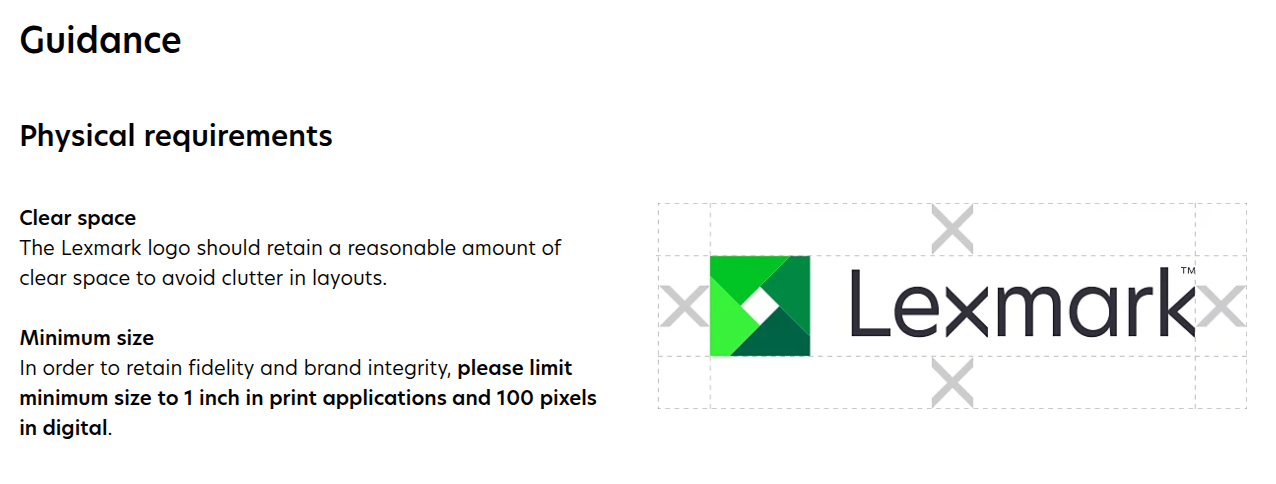
The content strategy came down to three principles: simplify, prioritize, and make it usable. The old guidelines had tried to cover everything in exhaustive detail. We focused on making the core standards scannable and practical for the people applying them day to day.
We also made a deliberate choice about how to publish the content. Essential guidance went on the web pages themselves — easy to find, easy to read. Deeper documentation went into downloadable PDFs for teams and partners who needed more detail. That hybrid model gave us flexibility without overwhelming the site.
The final scope covered brand overview, logo usage, color, typography, photography, illustration, video and motion, and web components. The messaging team joined later in the process to add writing and messaging guidance.

How It Came Together
Launching Brand Central required close coordination across a lot of moving parts. Content was drafted in Word documents, then designed and laid out as both web pages and PDFs. The final implementation used AEM’s out-of-the-box capabilities, eventually expanding to include DAM support for asset management.
Because this was the first site on the new AEM environment, the technology team was working through platform setup at the same time the team was designing the site, establishing page templates, and finalizing content. That meant constant communication between global marketing leadership, UX, design, art direction, video production, technology partners, and messaging stakeholders. It was genuinely collaborative work — no single person or team could have pulled it off alone.
From kickoff to launch, the project took about six months.
The Outcome
Lexmark Brand Central replaced an outdated, inaccessible set of brand guidelines with something the whole organization could actually use. Internal teams and third-party agencies gained a clear, centralized resource for brand standards. The platform launched before the Xerox acquisition and became Lexmark’s official source of truth for brand identity — a foundation that could keep evolving as the brand continued to grow.
The friction didn’t disappear overnight, but the platform gave everyone a shared starting point. That matters more than it might sound.

What This Project Demonstrates
This project is less about any one deliverable and more about a leadership approach. I found a way to help the team make progress on work that was stalled and the path forward wasn’t obvious. What moved things forward was creating the right structure — a focused sprint, a clear process, and a team that felt supported enough to do their best work.
The individual contributors on this project are the ones who made it real. My job was to build the conditions for that to happen and keep the cross-functional pieces moving together.
Capabilities Demonstrated
- Content strategy and governance
- Enterprise brand systems
- Agile team facilitation
- Cross-functional collaboration
- AEM content planning
- Stakeholder alignment across global teams
Leave a Reply
You must be logged in to post a comment.