Category: Leadership

  • Two worlds, one playbook: what higher education and corporate roles taught me about marketing and digital work


    After experience working in both higher education and corporate environments, I have been reflecting on what each has taught me. The differences are real. But so are the parallels.

    A few observations I keep coming back to:

    The core challenge is the same everywhere.

    More work than resources. More priorities than capacity. Every organization I have been part of, regardless of size or sector, has navigated this tension. The challenge is not unique to any one environment. What varies is how organizations respond to it.

    The tools for making decisions look different, and both have something to offer.

    Corporate environments tend to have clearly defined P&L structures that create natural forcing functions for ROI measurement. Market values, business cases, and financial accountability are built into the operating model. That clarity can accelerate decisions.

    Higher education operates under a different financial and mission-driven model. ROI is harder to isolate when you are serving students, communities, accreditors, and public trust simultaneously. That complexity is not a weakness. It reflects a genuinely broader definition of value. The challenge is developing the discipline to measure that value intentionally rather than letting it go unmeasured.

    Both environments are better when they borrow from each other.

    Prioritization is a skill, not a default.

    Every environment I have worked in has had urgent requests that competed with strategic work. The organizations that handled this well had an actual prioritization process, not just good intentions. They revisited priorities consistently, communicated them clearly, and protected the work that mattered most. The ones that struggled treated every request as equally urgent, which meant nothing was truly prioritized.

    This is equally true in higher education and corporate settings. The method may look different. The discipline required is the same.

    Scalability is contextual, and that matters.

    What works at one organizational scale does not automatically transfer to another. A lean team at a smaller institution may be remarkably effective within its scope. That same team structure applied to a larger institution with significantly more programs, audiences, and enrollment goals would be stretched past the breaking point. The same logic applies in corporate environments. A governance model built for a large enterprise does not always translate cleanly to a smaller, faster-moving team.

    Understanding the scale you are operating at, and designing your processes accordingly, matters more than importing best practices from a different context.

    Measuring value has to go deeper than the obvious metrics.

    Enrollment numbers matter. Revenue matters. These are real and necessary measures of organizational health. But in education especially, the most important outcomes extend well beyond them. Whether graduates are prepared for meaningful work. Whether programs serve the communities they are designed for. Whether the investment individuals make in their education returns real value to their lives.

    Organizations that take this seriously tend to build better programs, not just bigger ones. That pursuit of deeper value is one of the things I most respect about the best higher education institutions I have worked with.

    Collaboration across organizational lines is always worth the effort.

    Silos exist in every environment. I have seen them in large corporations and small colleges alike. The teams that consistently deliver the best work find ways to build meaningful connections across those lines anyway. Not by eliminating structure, but by investing in relationships and shared goals that cut across it.


    What has your experience taught you across different sectors or environments? I would be glad to hear what sounds familiar or looks different from where you sit.

    This article originally appeared on LinkedIn at https://www.linkedin.com/pulse/two-worlds-one-playbook-what-higher-education-roles-me-moore-ed-d–bqt6f/
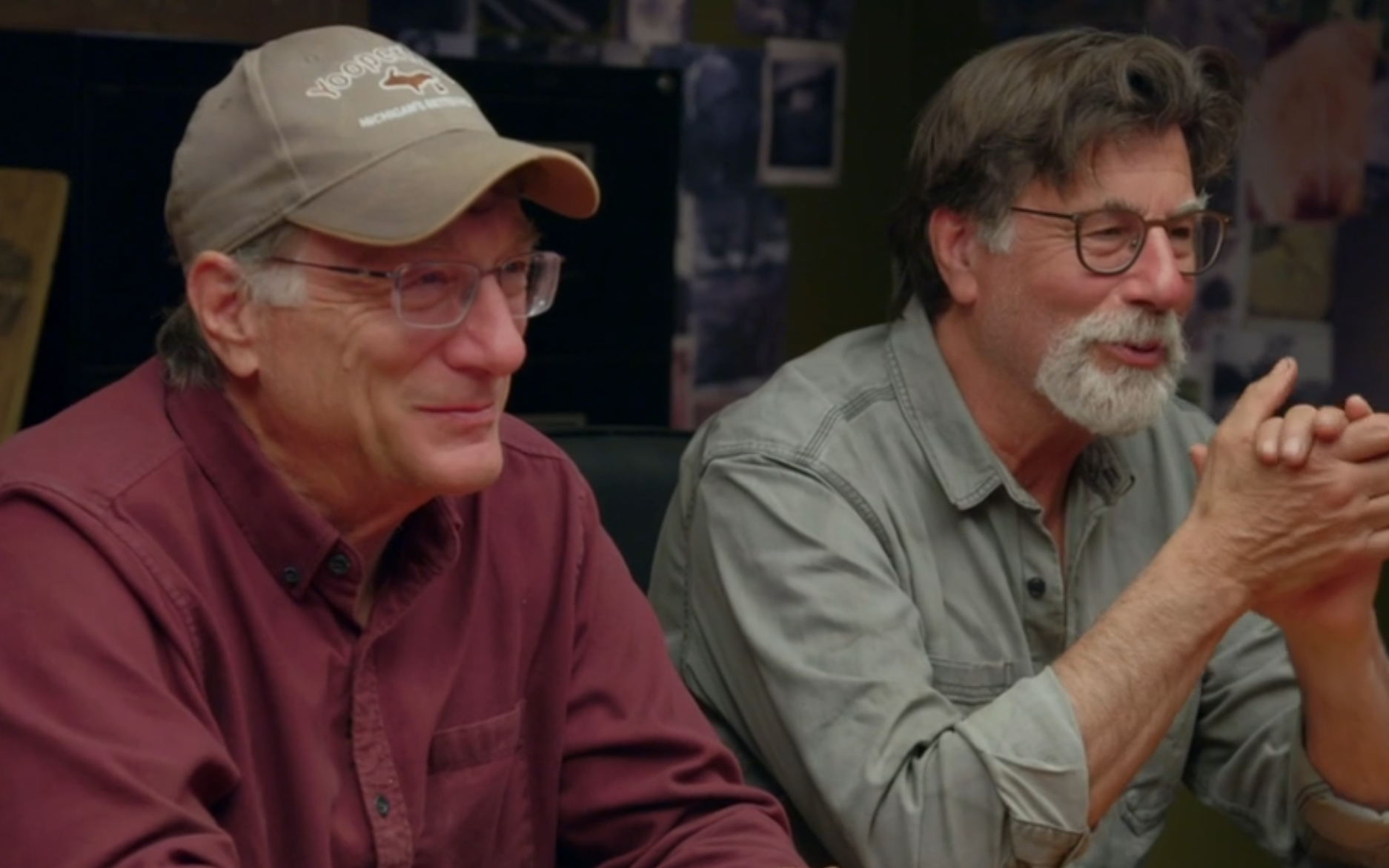
  • What a Reality TV Show About Buried Treasure Taught Me About Work

    What a Reality TV Show About Buried Treasure Taught Me About Work


    I’ll be honest. When my friend Cody first told me about The Curse of Oak Island, I was not exactly encouraging. A reality show about two brothers digging holes on a Canadian island looking for treasure? I gave him a hard time about it. Respectfully, of course.

    Eventually I started watching. Season one was slow. There was a lot of poking around, a lot of theories that felt like a stretch, and not much to show for it. I kept it on in the background while doing other things around the house, half paying attention.

    Then something shifted. Slowly, and I mean very slowly, which felt appropriate given the pace of the show, I found myself actually invested. I am currently at the end of season eleven, and while I am still not fully convinced they are going to find what they are looking for, I need to see how it ends. Cody wins this round.

    Here is what surprised me along the way. The Curse of Oak Island kept making me think about work. Not in a forced, everything-is-a-business-lesson kind of way. More like I kept noticing things on screen and thinking, yes, that. That is something I have seen play out in a conference room or a planning session or a team meeting. Here are the ones that stuck with me.


    Respect the work that came before you.

    In one of the later seasons, the team uncovered a stone pathway dating back to around 800 CE. The discovery required them to stop, step back, and think carefully about how to proceed without destroying something that had survived for over a thousand years. The instinct on a dig site — and honestly, in a lot of organizations — is to keep moving forward. But sometimes the most important thing you can do is pause and treat what you have inherited with care.

    I think about this in the context of taking over a web platform, a team, or a process that someone else built. It is easy to look at what exists and immediately want to change it. Sometimes change is necessary. But there is almost always a reason things are the way they are, and the person who takes time to understand that context before making changes tends to make better decisions than the person who arrives with a plan already written.

    Oak Island stone pathway overhead angle. Original screenshot from Amazon Prime video.

    Your environment will surprise you. Plan for it anyway.

    Oak Island is not a cooperative place to work. Over the course of the series, the team has dealt with hurricanes, flooding, shafts filling with water, and roads washing out entirely. In one stretch, they had to rebuild a road from scratch before any other work could continue. That was not in the original plan.

    What struck me was not that the setbacks happened — it was how the team responded. They acknowledged what was in front of them, addressed it, and found a way to keep moving toward the goal. They did not let the road washout stop them. They built a new one.

    Most projects I have been a part of have had a version of a washed-out road. Something that was not in the plan and required real work before the planned work could continue. The teams that handled those moments well were the ones who had built enough flexibility into their approach that an unexpected obstacle did not become a reason to stop.

    Follow the data, even when it is inconvenient.

    Some of the most compelling moments in the series are when the team connects chemical and metallurgical evidence from specific artifacts on the island to physical locations of interest. These are not loose associations. They are documented scientific data points that, taken together, are genuinely difficult to dismiss. The team does not ignore evidence because it complicates or confirms the narrative. They follow it.

    This is harder than it sounds in practice. Data that confirms what you already believe is easy to act on. Data that challenges your current interpretation requires something more — the willingness to adjust your thinking and, sometimes, your plan.

    Map from Oak Island showing boreholes. Original screenshot from Amazon Prime.

    When the plan does not work, adapt without losing sight of the goal.

    Following the data and interpreting it correctly are two different things. The Oak Island team has been wrong before. Theories that seemed well-supported turned out to point in the wrong direction. When that happens, the choice is to abandon the effort or recalibrate and keep going. They recalibrate.

    I have seen this play out on web platform projects, brand initiatives, and content strategies. The data said one thing. The interpretation was off. The implementation did not produce the expected result. The teams that treated that as information to use in the future rather than failure were the ones that made meaningful progress over time.

    Do not be afraid to get uncomfortable.

    The triangle swamp is a recurring location in the series. It is muddy, it smells, and it is genuinely unpleasant to work in. It has also yielded some of the most interesting findings of the entire project. For many seasons, the team kept coming back to it because the evidence suggested it mattered — even though working there was miserable.

    Some of the most rewarding work I have been a part of required wading through something difficult before it paid off. A messy governance situation. A platform migration that kept surfacing unexpected problems. A stakeholder relationship that required more patience than felt reasonable at the time. The discomfort was not incidental. It was part of the process.

    Oak Island swamp overhead view on a foggy day. Original screenshot from Amazon Prime.

    Get the right experts involved.

    The Oak Island team does not try to figure everything out themselves. Over the course of the series, they have brought in archaeologists, metallurgists, historians, geophysicists, excavators, and (my personal favorite) a metal-detecting ninja. Each expert brought something the core team did not have. Each one contributed something that moved the work forward.

    I have found this to be one of the most consistently underutilized instincts in organizational work. There is a version of the problem that the existing team can solve. And then there is a version of the solution that becomes possible when you bring in someone who has spent their career thinking about exactly this kind of challenge. Those are not the same version.


    I am still watching. I have made no promises to Cody about what I will conclude when I reach the end of season fourteen. But I will say this: a show I dismissed as a long shot turned out to be more substantive than I initially expected. There is probably something to learn from that too.